Commercial cleaning and food hygiene professionals in Brampton support food establishments, food centers, baking facilities, warehouses, and food service operations maintaining standards. They decontaminate high-contact points, food preparation surfaces, equipment, floors, drains, restrooms, and food handling spaces using certified products, at correct dilution, and recording exposure duration. You need regular sanitation based on risk, volume, allergens, and regulatory assessments, along with documented proof that support HACCP, quality reviews, and public health compliance. The following information outlines what strong sanitation programs must contain.
Essential Summary
- Brampton's food safety cleaning professionals provide services to restaurants, grocery departments, commissaries, warehouses, bakeries, schools, mobile vendors, and allergen-sensitive operations.
- High-touch surfaces, food-contact equipment, kitchens, floors, drains, restrooms, and storage areas are disinfected using area-specific procedures to avoid cross-contamination.
- Checking of proper chemical concentration, alignment, and contact time is executed by qualified providers, with finishing filed using checks, assessments, and correction logs.
- Sound hygiene timelines take into account risk, throughput, switches, spills, and guidelines when designating routine, weekly, and cyclical activities by area.
- Liability, colour-coded instruments, HACCP, health regulatory knowledge, safety training instruction, credentials, and assessment-ready cleaning documentation are important provider characteristics.
Brampton Establishments That Need Food Safety Cleaning: Which Ones?
You must comply with food safety cleaning if your operation is falls under health inspections, food codes, or HACCP protocols. This covers eateries, dining areas, supply warehouses, retail departments, meat counters, fish departments, general stores, and facility-based kitchens.
Documented food sanitation is furthermore essential in warehouses, food manufacturing plants, cold storage sites, retail bakeries, school nutrition programs, banquet halls, and meal delivery hubs. Mobile and temporary establishments matter too, examples including food trucks, event vendors, and temporary stalls. Your establishment needs established hygiene procedures when your workers process ingredients, portion ready-to-eat items, reheat products, or store allergens. In Brampton, food safety is not optional; it represents legal, operational, and consumer protection compliance.
What Do Brampton Cleaning Professionals Handle?
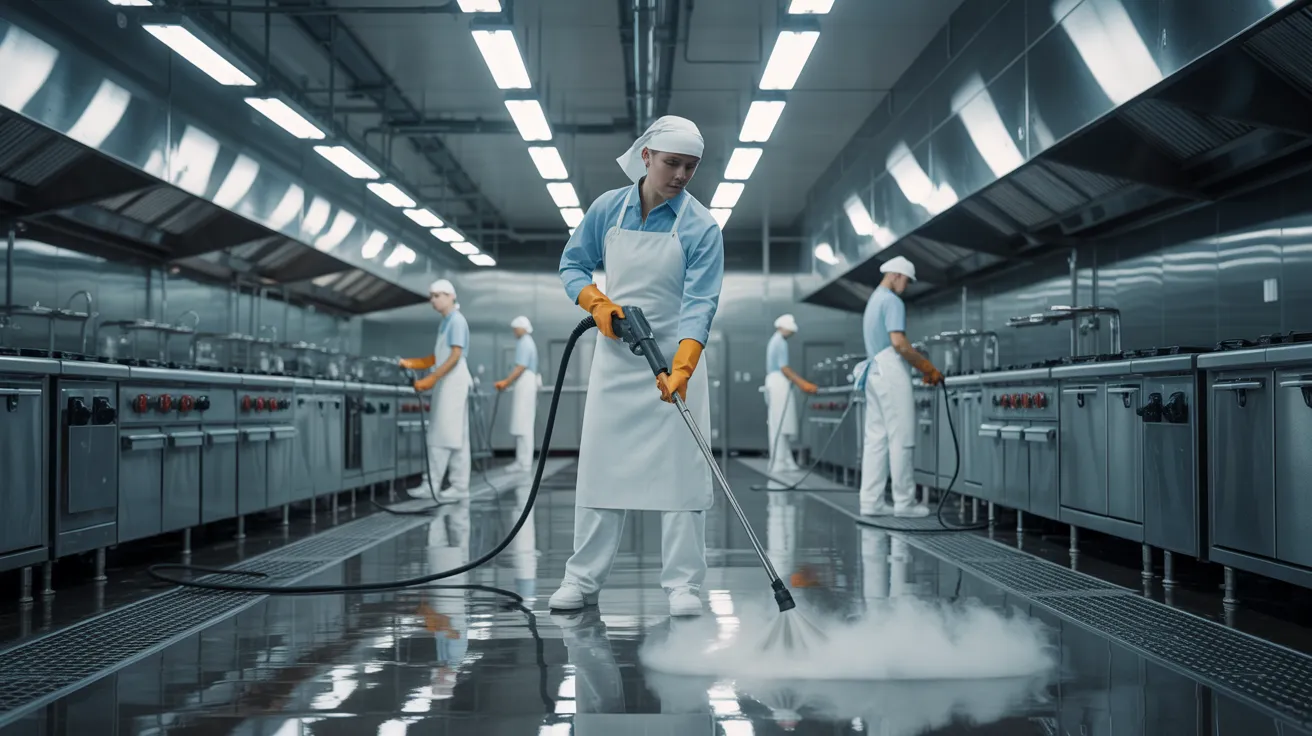
Professional cleaning teams specializing in Brampton sanitize touched surfaces, kitchen facilities, ground surfaces, and restrooms to satisfy food safety standards and health requirements. Emphasis on these spaces stems from extreme cross-contamination risk, potential for accidents, and possible regulatory violations.
If you grasp what they sanitize, you'll successfully ensure your operation satisfies all operational and regulatory compliance needs.
Key High-Touch Surface Disinfection
organize disinfection frequency determined by activity levels, infection risk, and how the space is used.
verify that sanitization is adequate and support remedial steps when results come outside required standards
Cooking Zones, Walking Surfaces, and Restroom Environments
Expect Brampton cleaning experts to target kitchens, floors, and restrooms because each area carries distinct food safety, slip-and-fall, and sanitation risks. In industrial kitchens, you need grease removal from cooking stations, appliance surfaces, drain systems, preparation areas, and backsplashes to reduce contamination and pest pressure.
Floor care that is documented should also be anticipated. Technicians clean and remove buildup from tile grout, ceramic surfaces, and vinyl floors, then apply correct drying techniques so you can limit falls and meet regulatory standards. They also address entry points where dampness and dirt enter the building.
Restroom sanitation requires disinfecting touchpoints, fixtures, partitions, dispensers, and waste containers, restocking supplies and controlling odours. They also service restaurant moprooms, where chemical storage, sink hygiene, and drainage conditions can affect sanitation compliance and staff safety daily.
Food Safety Cleaning Significance for Brampton Businesses
Brampton operations demand food-safe cleaning standards to meet compliance obligations and pass audits. You also minimize cross-contamination by cleaning and sanitizing food-contact surfaces, equipment, and high-touch areas correctly. Most importantly, you safeguard community wellness by reducing the chance of food poisoning in your establishment.
Health Code Compliance
Food operations in Brampton face stringent health requirements, making food safety cleaning crucial to adhering to health code requirements, safeguarding patrons, and eliminating enforcement action. You must maintain sanitary food-contact surfaces, recorded sanitation plans, proper chemical use, and documented employee protocols that comply with municipal and provincial inspection expectations.
When inspectors evaluate your operation, they evaluate whether your hygiene protocols supports proper stock preservation, equipment sanitation, refuse management, and washroom maintenance.
Cross-Contamination Prevention
Maintaining health code standards copyrights on your power to stop cross-contamination during daily food handling and cleaning. You need to partition uncooked items from finished dishes, sterilize work zones between assignments, and position cleaning agents away from food surfaces. Clear procedures reduce transfer risks and support consistent compliance during inspections.
Implementing allergen segregation helps keep priority allergens from contacting communal work zones, bins, or devices. Utilize separate boards, color-labeled items, and strict utensil labeling so staff don't mix items during preparation or service. Enforce hand hygiene following fresh proteins, aquatic items, egg products, or allergen materials. Replace wiping cloths regularly, and validate disinfectant levels using test strips. When you train staff to follow these controls every shift, you create a cleaner, safer operation that satisfies Brampton's food safety needs daily.
Public Health Protection
When sanitation efforts deteriorate, you don't only face inspection setbacks—you expand the chance of food contamination affecting customers, staff, and the larger Brampton community. You also weaken your role in protecting public health, especially in busy food facilities where pathogens travel quickly through surfaces, equipment, and touchpoints.
You need sanitation procedures that eliminate content contaminants, disinfect properly, and confirm effectiveness. That means following exposure periods, employing authorized sanitizers, recording cleaning times, and educating employees to meet regulatory standards. These controls support pathogen reduction by reducing pathogens before they contaminate surfaces or food. In Brampton, rigorous cleaning protects vulnerable populations, limits outbreak potential, and helps you demonstrate proper care. When you clean to standard, you don't just meet regulations—you substantially decrease danger and support safer food service throughout the region.
How Does Cleaning Support Food Safety Compliance?
Prioritizing rigorous cleaning routines underpins food safety compliance by minimizing contamination hazards, controlling pathogen growth, and positioning your facility in accordance with sanitation requirements under HACCP-based programs and public health regulations. You verify that food-handling surfaces are visibly clean and microbiologically controlled, enabling documented preventive controls and inspection readiness.
Comprehensive cleaning also reinforces allergen management by extracting residues that can lead to undeclared allergen exposure. When you match established sanitation practices with standards training, your staff can follow standardized methods, handle approved chemicals properly, fill out documentation accurately, and manage discrepancies prior to they escalate. Consistent cleaning facilitates audit trails, verifies corrective steps, and demonstrates due diligence throughout audits. Moreover, it supports you preserve product quality, preserve compliance standards, and lower the possibility of enforcement actions, product recalls, customer complaints, and avoidable safety threats.
What's the Best Time to Arrange Commercial Cleaning?
food contact surfaces, bathrooms, and frequently touched areas
Seasonal deep cleaning ought to be scheduled during shutdowns, weather-related soil buildup, or pest-pressure periods
Finding Quality Brampton Cleaning Experts: A Guide
Start by screening providers against food sanitation standards, not price alone. You should verify that each company understands CFIA, public health, and HACCP compliance standards relevant to your facility. Ask for insurance documentation, WHMIS compliance, documented staff training, and supervision practices. Review whether technicians understand contamination prevention, chemical handling, and traceable sanitation records.
Additionally, you need to evaluate service dependability and responsibility. Obtain references from Brampton food operations, then review service speed, corrective-action procedures, and communication practices. Verify the company conducts supplier reviews and can deliver inspection-ready documentation when inspectors or external parties need proof. Verify equipment is maintained, colour-coded tools are applied correctly, and site-specific hazards are identified. A qualified provider ensures compliance, product integrity, and your reputation.
What does a Food Safety Cleaning Plan consist of?
Create a documented strategy that clarifies every sanitation task, standard, and responsibility prior to production start. You should detail cleaning frequencies, approved chemicals, dilution rates, contact times, tools, and verification methods for each location, surface, and apparatus. Incorporate pre-operational inspections, corrective actions, and employee training requirements.
Your plan should also cover contamination prevention, garbage management, pest control procedures, and recorded timelines for restrooms, drains, floors, and food-contact areas. Explain how you'll keep raw and prepared foods apart, enable ingredient tracking, and maintain accurate allergen labeling through validated cleaning between product changes. You should assign accountability, keep signed records, and review results against regulatory standards, HACCP controls, and customer requirements. When gaps appear, revise procedures immediately and re-educate staff.
Frequently Asked Questions about the Plan
Can cleaning services support nighttime operations in Brampton properties?
If you operate controlled facilities, you'll also require records that support inspections and maintain compliance.
Will sanitation professionals address hazardous incidents?
Yes, you can discover many Brampton cleaning professionals providing hazard containment services. They handle hazardous incidents, assess dangers, isolate contamination, and initiate rapid cleanup to reduce risk and avoid operational impact. You should confirm timeframes, certifications, safety protocols, and waste procedures. If your facility must meet compliance standards, select a service that documents events, adheres to standards, and supports verification.
Do environmentally safe disinfectants function safely on food preparation areas?
Yes, green disinfectants can be appropriate for surfaces contacting food if you select products labeled food safe and meeting regulatory standards. You should verify contact duration, dilution ratios, and rinsing needs before use. Many plant-derived products reduce chemical burden, but you should gather evidence of effectiveness against target microorganisms. To preserve residue-free areas, you should follow precise manufacturer instructions and verify the disinfecting agent complies with relevant food safety standards.
Can cleaning plans adjust with seasonal variations?
Certainly, cleaning plans adjust to seasonal shifts readily. Adjust schedules, staff levels, sanitizers, and verification steps to correspond with production rhythms while maintaining regulatory requirements. Limit equipment downtime by organizing sanitization during production shifts, peak volumes, and usage cycles. Concurrently update SSOPs, staff education, and environmental testing to address transient threats, novel allergens, or increased soiling. Scheduled reviews preserve the schedule current.
Do professional cleaners instruct staff members in proper hygiene techniques?
Yes, commercial cleaners typically educate your staff on hygiene standards. You receive employee instruction on proper chemical use, contact times, contamination control, equipment disassembly, and record keeping. They typically align instruction with HACCP, GMP, and CFIA or regional health department regulations. Many perform hygiene inspections to confirm adherence, identify gaps, and reinforce corrective actions. This allows you to sustain uniform processes, succeed in audits, and reduce food safety risks regularly.
Summary
By partnering with Brampton food safety and commercial cleaning experts, you aren't simply tidying—you keep your operation compliance-focused and your practices in compliance. From production areas to kitchen zones, every sanitized surface and organized space decreases contamination and prevents costly issues. By arranging service at appropriate intervals and following a documented cleaning plan, you protect your team, customers, and your credibility. In a strictly regulated industry, hygienic conditions are mandatory—they're essential to successful operations.